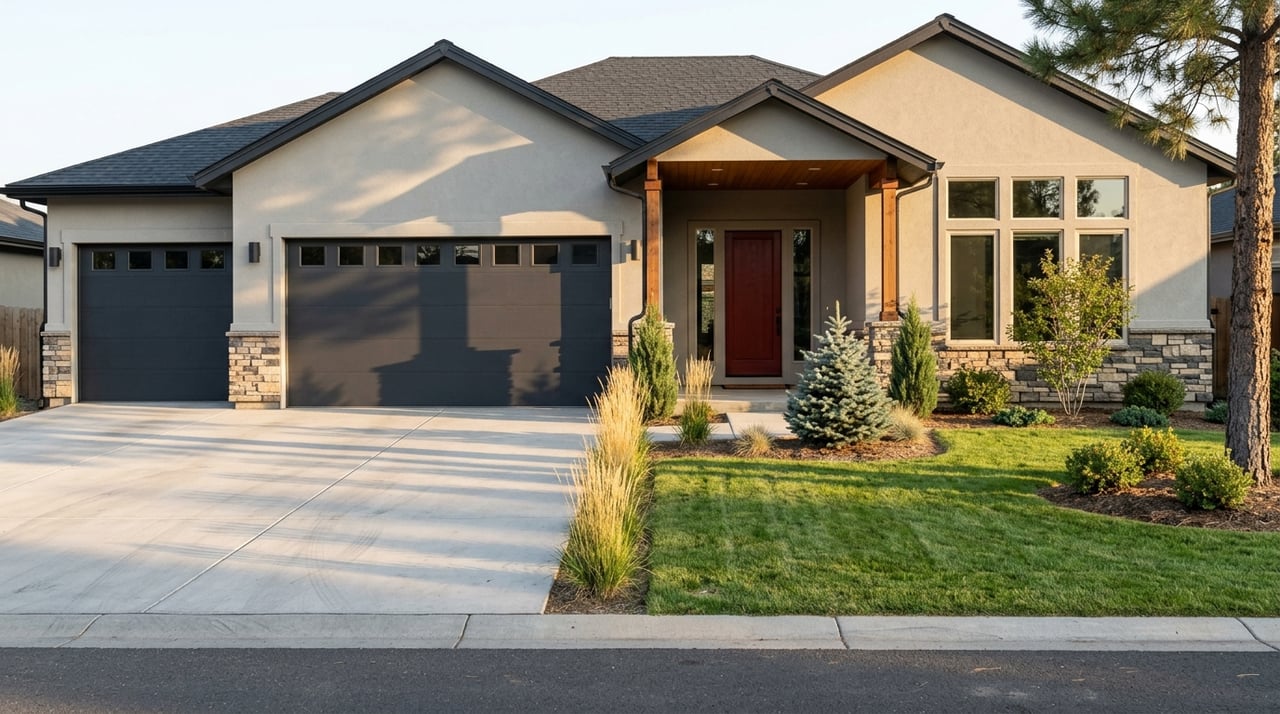
Monument Move‑Up Buyers: Stay Local Or Head To Castle Rock?
July 9, 2026
July 9, 2026
Wondering whether your next move-up home should keep you in Monument or send you north to Castle Rock? If you already own in Monument, that decision can feel surprisingly close, especially when both towns offer newer housing, suburban convenience, and access to the Front Range lifestyle. The good news is that the numbers point to a fairly clear set of trade-offs, and understanding them can help you make a smarter move with your equity. Let’s dive in.
For many Monument move-up buyers, the question is not just about buying a bigger house. It is about deciding what matters most in your next chapter, whether that is more land, more listing options, a newer build, or a different price point.
Based on the current market snapshot, Monument and Castle Rock are close in some ways and meaningfully different in others. That makes this a practical comparison, not just a casual one.
Current listing data shows Monument with a median listing price of $800,000, 49 days on market, $234 per square foot, and 438 active listings. Castle Rock shows a median listing price of $735,000, 51 days on market, $222 per square foot, and 857 active listings.
Recent sold-data snapshots also keep the two towns fairly close on closed pricing. Monument shows a median sale price of $656,607 and 44 days on market, while Castle Rock shows a median sale price of $647,363 and 21 days on market.
| Market factor | Monument | Castle Rock |
|---|---|---|
| Median listing price | $800,000 | $735,000 |
| Days on market, listings | 49 | 51 |
| Price per square foot | $234 | $222 |
| Active listings | 438 | 857 |
| Median sale price | $656,607 | $647,363 |
| Days on market, sold homes | 44 | 21 |
The big takeaway is simple: Monument is asking a bit more overall, while Castle Rock offers more inventory and slightly lower asking prices on average. For a move-up buyer, that can affect how far your budget stretches and how many options you can compare.
If you stay in Monument, one of the clearest advantages is the tendency toward larger parcels. Current listings include everything from 7,405-square-foot lots to 0.25-acre, 0.47-acre, 0.64-acre, 0.75-acre, 1-acre, 2.5-acre, and 5-acre examples.
That does not mean every Monument home sits on acreage. It does mean that if your move-up goal includes more elbow room, Monument tends to lean in that direction.
Monument also appears to skew newer in its housing stock. In 80132, the median year built is 2006, and nearly 60% of housing was built since 2010.
For buyers who want a newer-average home without leaving the community they already know, that can be a strong reason to stay local. You may find the move feels simpler because you are changing homes, not changing everything around you.
Castle Rock’s biggest advantage is choice. With 857 active listings compared with Monument’s 438, you are looking at a much deeper pool of homes.
That larger inventory can matter if your wish list is getting more specific. Maybe you want a certain floor plan, a particular lot size range, a newer home, or a home at a very specific price point. More listings usually mean more combinations to consider.
Castle Rock also has a more varied market by zip code. Monument’s primary 80132 zip shows a median listing price of $830,000, while Castle Rock ranges from $659,900 in 80104 to $699,999 in 80109 and $997,000 in 80108.
That spread suggests Castle Rock gives you more room to shop across price tiers. You may be able to move up while staying in a lower bracket, or stretch into a higher bracket if your goal is a more premium home or setting.
Lot size is often one of the biggest move-up priorities, especially if your current home feels tight inside or out. Here, the directional signal favors Monument.
Castle Rock listings include many 7,405- to 8,712-square-foot subdivision lots, plus some 0.26-acre and 0.94-acre homes and occasional 5-plus-acre estate parcels. In other words, Castle Rock has variety, but much of its inventory still reflects more standard subdivision lot sizes.
Monument, by comparison, shows more frequent larger-lot examples in current listings. If your goal is to convert your equity into more land, more privacy, or more outdoor breathing room, Monument may give you a better lane for that search.
Housing age can shape how a move-up home lives day to day. Newer-average housing often means more modern layouts, larger primary suites, open-concept living, and finishes that may need fewer updates right away.
Monument’s housing stock trends newer overall, with a median year built of 2006 in 80132 and a large share built since 2010. That gives local move-up buyers a strong chance of finding homes with more recent design and construction patterns.
Castle Rock also has plenty of newer housing. The town reports an average of about 780 single-family homes and 150 multifamily units built annually over the past 25 years, showing that new product has continued to come online.
At the same time, Castle Rock has older housing concentrated in the central part of town, and its downtown includes structures dating from the 1800s through the turn of the century. That broader age mix can be a plus if you want more variety in setting and home style.
For many buyers, commute assumptions can drive the whole conversation. But the townwide averages here are almost the same.
Monument workers average a 28.8-minute commute, while Castle Rock workers average 28.6 minutes. Both towns are heavily drive-alone markets.
Castle Rock does show a slightly higher work-from-home share at 29%, compared with 25% in Monument. Still, the broader lesson is that your real commute question is probably about where you work, not about a meaningful average difference between the two towns.
If you are trying to make the decision practical, it helps to match the market data to your actual move-up goals.
If lot size is near the top of your list, Monument has the stronger signal. The listing examples point to more opportunities for larger parcels, which can be especially appealing if you want more outdoor space or a less tightly packed setting.
With a median year built of 2006 in 80132 and nearly 60% of housing built since 2010, Monument offers a newer-average profile. That can be helpful if you want a more current layout or hope to limit major updates after closing.
Castle Rock’s 857 active listings make it the stronger market for selection. If your next move depends on comparing many homes across several neighborhoods and price tiers, that wider inventory base can work in your favor.
Castle Rock’s zip-code pricing shows both lower and higher brackets than Monument’s primary zip. That means you may find a broader range of move-up paths, whether you want to protect your monthly payment or stretch into a different tier.
For most Monument move-up buyers, this choice comes down to what you want your equity to buy next. If your goal is to turn it into more land, a newer-average home, and a move that keeps you rooted in a smaller community, staying in Monument likely makes sense.
If your goal is to turn that same equity into more listing choices, more price-band flexibility, and a broader mix of neighborhoods and housing ages, Castle Rock deserves a serious look. Neither path is automatically better. It is about fit.
Before you commit to either market, it helps to compare your current home value with what your target budget actually buys in both towns right now. A side-by-side strategy can show whether staying local gets you the lot and home style you want, or whether Castle Rock opens more doors for the same money.
That kind of comparison is especially useful for move-up buyers because small differences in inventory, lot size, and price tier can have a big impact on what feels like a true upgrade. A clear local read can save you time and keep your next move focused.
If you are weighing a Monument move-up and want practical guidance on both markets, The Front Range Real Estate Company can help you compare your options, understand your home’s value, and build a plan that fits your goals.
July 23, 2026
July 16, 2026
July 9, 2026
July 2, 2026
June 25, 2026
June 18, 2026
June 11, 2026
June 4, 2026
May 28, 2026
We pride ourselves in providing personalized solutions that bring our clients closer to their dream properties and enhance their long-term wealth. Contact us today to find out how we can be of assistance to you!