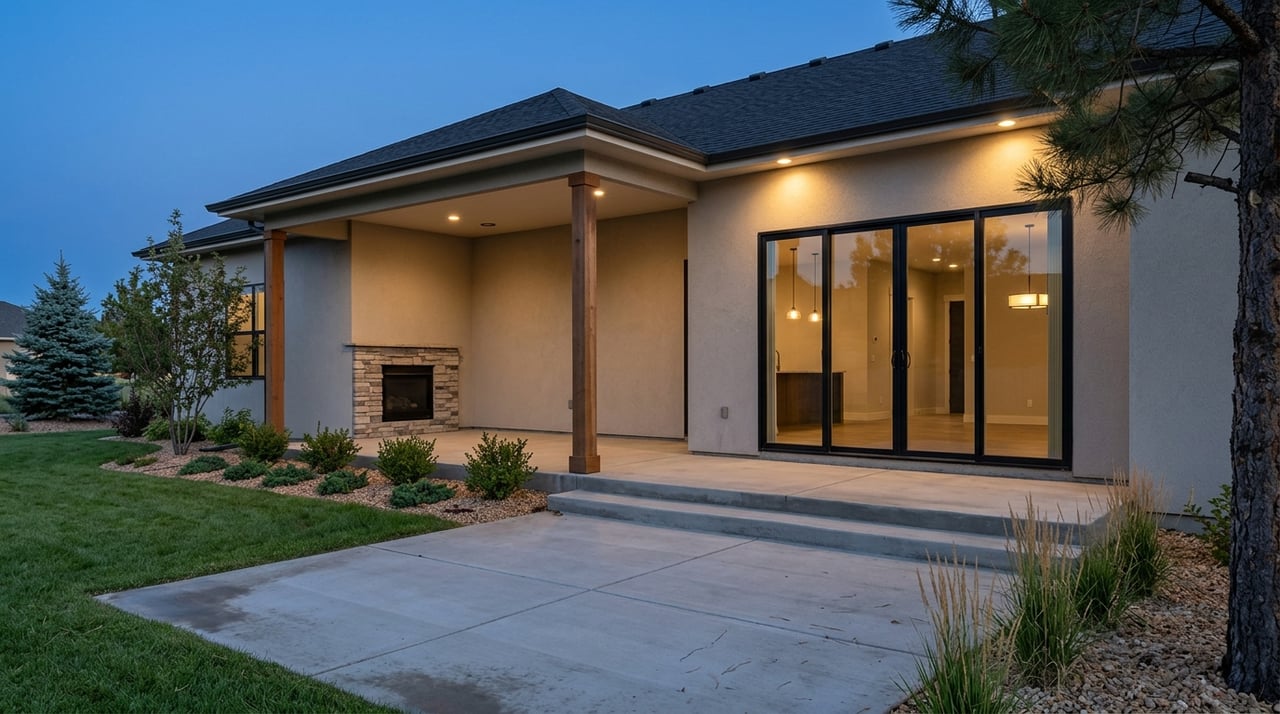
Boulder Vs Suburban Front Range: Housing Trade‑Offs Explained
June 11, 2026
June 11, 2026
If you are torn between Boulder and the suburban Front Range, you are not just comparing prices. You are really choosing between two different ways of living day to day. The good news is that the trade-offs are pretty clear once you look at the numbers, and understanding them can help you buy with more confidence. Let’s dive in.
Boulder carries the highest price tag in this comparison set. Redfin’s April 2026 snapshot puts Boulder’s median sale price at $829,572, with a median of $588 per square foot.
By comparison, Highlands Ranch sits at $684,646 and $277 per square foot, Parker is $649,665 and $239 per square foot, and Castle Rock is $643,668 and $233 per square foot. That means Boulder comes with about a 21% premium over Highlands Ranch and roughly 28% to 29% more than Parker and Castle Rock.
The price-per-square-foot gap is even more dramatic. Boulder is about 2.1 times Highlands Ranch and about 2.5 times Parker and Castle Rock on that measure, which tells you the premium is not only about being in Boulder. It also reflects the kind of housing stock buyers are competing for.
When buyers compare Boulder to suburban communities along the Front Range, they often start with budget. That makes sense, but price alone does not tell the whole story.
In practical terms, Boulder tends to offer a more mixed housing environment with a heavier share of attached and rental properties. The suburban markets in this comparison lean much more heavily toward detached homes, owner occupancy, and household setups that suggest more living space.
Boulder has 45,900 households, with an average of 2.1 persons per household. Its housing stock is 55% multi-unit, and 58% of housing is renter occupied.
That profile is very different from the suburban comparison points. It suggests a market where condos, townhomes, apartments, and other attached housing types play a much larger role in the overall mix.
Highlands Ranch is 80% single-unit housing and 76% owner occupied. Parker is 83% single-unit and 74% owner occupied, while Castle Rock is 85% single-unit and 82% owner occupied.
Those numbers line up with what many buyers picture when they think about suburban Front Range living. You are more likely to see detached-home inventory and ownership patterns that support buyers who want more space or a more traditional suburban layout.
One useful public-data clue is average household size. Boulder averages 2.1 persons per household, compared with 2.6 in Highlands Ranch, 2.9 in Parker, and 2.8 in Castle Rock.
That does not measure square footage directly, but it does help show how these places function differently. Boulder reads as the smaller-household market in this group, while Parker and Castle Rock read as the largest-household options.
If newer housing matters to you, the suburban side of the comparison gets stronger. ACS-based summaries place Boulder’s median year built at 1978, while Highlands Ranch comes in at 1997.
That is about a 19-year gap, which helps explain why Highlands Ranch often feels like the newer-stock option. Parker and Castle Rock also fit the broader suburban pattern, with housing mixes that skew heavily toward single-unit, owner-occupied homes.
If your ideal routine includes walking, biking, or limiting how often you need to drive, Boulder has a clear edge. The data shows a daily-life pattern that is meaningfully different from the suburban communities in this comparison.
Boulder’s mean commute time is 18.1 minutes. Among workers, 39% drive alone, 10% walk, 8% bike, 5% use transit, and 34% work from home.
Highlands Ranch has a mean commute of 24.2 minutes, with 61% driving alone and just 1% walking. Parker comes in at 26.1 minutes, with 65% driving alone, 1% walking, and 1% using transit.
Castle Rock posts the longest average commute of the group at 28.6 minutes. There, 63% drive alone and 2% walk, which reinforces how car-oriented the suburban pattern is compared with Boulder.
An interesting twist in this comparison is that Boulder looks more transient by population data, even though homes spend longer on the market. In Boulder, 30.7% of residents moved in the prior year.
That compares with 11.1% in Highlands Ranch, 12.3% in Parker, and 10.6% in Castle Rock. The higher share in Boulder lines up with its younger, renter-heavier, attached-housing profile.
At the same time, Boulder’s homes averaged 48 days on market, compared with 13 days in Highlands Ranch, 17 days in Parker, and 25 days in Castle Rock. So while Boulder supports a more mobile population overall, its for-sale market does not move the same way as these suburban markets.
The right choice depends on what you value most in your home search. In this comparison, there is no universally better market. There is only the market that best matches your budget, lifestyle, and space needs.
Boulder is easiest to justify if you are intentionally paying for walkability, centrality, and mixed housing types. If being able to walk, bike, or rely less on a car matters a lot to you, the numbers strongly support Boulder.
You may also prefer Boulder if you are comfortable with attached-home options and a market where smaller households and renter occupancy are more common. In that case, the premium may feel more aligned with how you actually want to live.
Highlands Ranch sits in a middle position in this comparison. It is still clearly suburban, with detached-home patterns and high owner occupancy, but its housing stock also reads newer than Boulder’s.
If you want a lower price point than Boulder without giving up a polished suburban housing profile, Highlands Ranch can make sense. It offers a balance of lower cost and a more ownership-oriented structure.
Parker stands out for the largest average household size in this group at 2.9 persons per household. It also remains well below Boulder on both median sale price and price per square foot.
If your priority is a detached-home environment and a housing pattern that supports more space, Parker deserves a close look. It trades Boulder’s walkability advantage for a more traditional suburban setup.
Castle Rock delivers a similarly suburban housing pattern at a discounted price relative to Boulder. It is strongly owner occupied, heavily single-unit, and still materially lower on both sale price and price per square foot.
The trade-off is commute time. With the longest mean commute in this set, Castle Rock can appeal to buyers who value detached ownership and lower cost more than they value proximity or non-car transportation options.
When you strip away the marketing language, this comparison gets simple. Boulder asks you to pay more for a more urban-form daily experience, stronger walkability, and a housing mix with more attached options.
The suburban Front Range communities in this set ask you to trade some of that convenience for more detached ownership patterns, larger household norms, newer-feeling inventory in some cases, and lower price per square foot. Knowing which trade-off matters most to you can save time, reduce second-guessing, and help you focus on the right market from the start.
If you are weighing Boulder against Parker, Castle Rock, or another Front Range community, a local conversation can help you sort out what fits your budget and your daily life. The team at The Front Range Real Estate Company can help you compare options, evaluate value, and move forward with a plan that fits your goals.
July 23, 2026
July 16, 2026
July 9, 2026
July 2, 2026
June 25, 2026
June 18, 2026
June 11, 2026
June 4, 2026
May 28, 2026
We pride ourselves in providing personalized solutions that bring our clients closer to their dream properties and enhance their long-term wealth. Contact us today to find out how we can be of assistance to you!